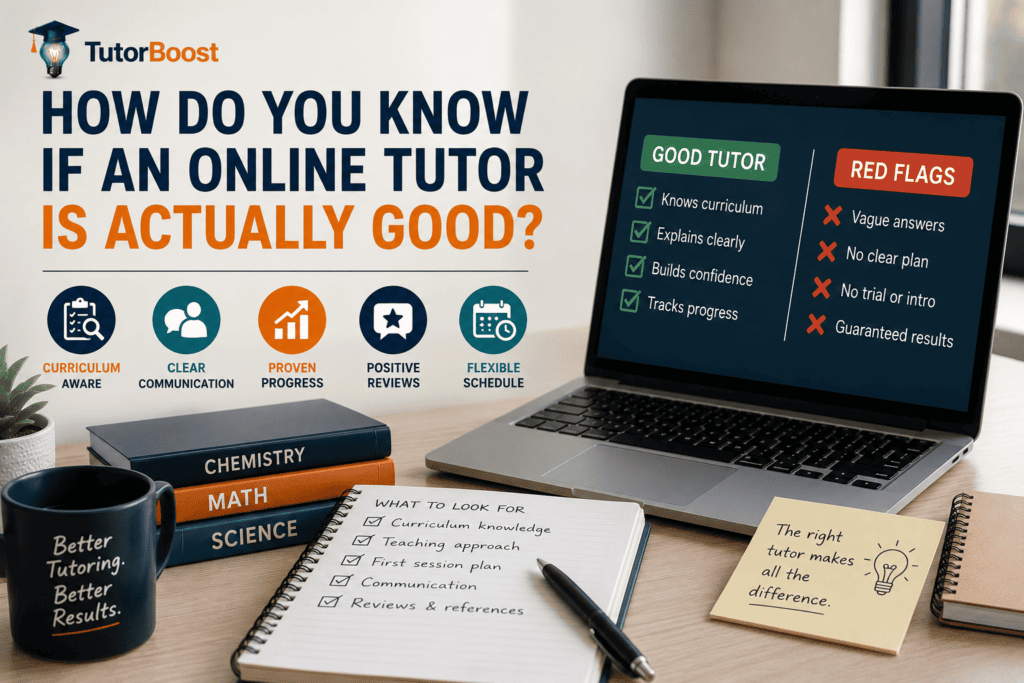
Every Online tutor profile says “patient,” “experienced,” and “results-driven.” Scroll through ten different listings and they all start to sound identical after a while. So how do you actually tell a good tutor from an average one before your child’s grades are on the line?
The honest answer isn’t found in a bio or a star rating alone, it’s found in what a tutor actually does before, during, and after your first session together. At TutorBoost, we walk parents through exactly what to look for at each of those stages, so you’re not just guessing based on a polished profile.
What Should You Look for Before You Even Hire a Tutor?
Quality signals are visible before the first session even starts, if you know exactly what to check rather than just skimming a profile.
Do They Know Your Child’s Actual Curriculum?
A tutor who asks specifically which curriculum, grade, or exam board your child follows within the first conversation is already showing more care than one who assumes every student needs the same generic lesson plan.
This matters especially for Canadian families, since Ontario, Alberta, and BC each structure their science and math curriculums differently.
A chemistry tutor unfamiliar with these differences, for example, might spend a session on titration or the pH scale in the wrong order entirely, wasting valuable time before an exam. A tutor who mentions specific course codes or grade-level expectations unprompted is usually signaling real, hands-on experience rather than a generic pitch memorized for every inquiry.
Are They Transparent About Rates and Availability?
A good tutor answers questions about pricing and scheduling directly and confidently, without dodging or redirecting the conversation. Hesitation or vague, shifting answers about cost is a subtle but telling sign, since a tutor confident in the value they provide rarely avoids the topic.
The same applies to scheduling. A tutor who clearly explains how make-up sessions or cancellations work is thinking ahead about the relationship, not just the first booking.
What Happens in a Good First Session?
The first session itself is one of the clearest quality tests available, often revealing more than any profile or review ever could.
Do They Diagnose Before They Teach?
A strong tutor spends the early part of the first session figuring out exactly where your child currently stands, asking them to walk through a problem or concept before jumping straight into new material. This diagnostic approach reveals gaps that a generic lesson plan would completely miss.
A tutor who skips this step entirely and dives straight into teaching new content is often guessing at your child’s level rather than confirming it. That single difference tends to signal whether they’re thinking about your child specifically or running the same script for everyone.
Do They Have a Clear Plan, or Are They Improvising?
Ask what the first session will actually look like before it happens. A tutor with a real answer, something specific about identifying gaps first, picking a focus area, and then building from there, is a far stronger sign than a vague “we’ll just see what they need,” which often means there’s no plan at all. The clarity of that single answer tends to predict the quality of everything that follows.
What Signs Show Up After a Few Sessions?
Some quality signals only become visible once tutoring is already underway, making the first few weeks just as important to evaluate as the initial hire.
Is Your Child’s Understanding Actually Improving?
Look past test scores alone and pay attention to whether your child can explain concepts back to you in their own words. Genuine understanding, not just memorized answers, is the clearest sign that tutoring is actually working rather than simply filling time.
Are They Communicating Progress Clearly?
A good tutor keeps you informed, sharing what’s improving, what still needs work, and what the plan is going forward. If you have no idea how sessions are going beyond your child showing up and logging off, that’s worth addressing directly rather than assuming everything is fine.
How Should You Actually Read Reviews and References?
Reviews matter, but only if you know how to evaluate them properly rather than just glancing at a star rating.
Why a Perfect 5-Star Average Isn’t Always a Good Sign?
A suspiciously uniform 5-star rating with very few detailed reviews can sometimes indicate incentivized or inflated ratings rather than genuine feedback. Look instead for reviews that mention specific, believable details, like a particular subject, grade level, or improvement over time.
These carry far more weight than generic praise like “great tutor, highly recommend.” A handful of detailed, four-star reviews mentioning real specifics is often more trustworthy than fifty identical five-star ratings with no substance behind them.
What to Actually Ask a Past Student or Parent?
If a tutor offers references, ask specific questions rather than general ones. Asking how the tutor handled a struggling topic, or what a typical session actually looked like, tends to reveal far more than simply asking “were you happy with them.”
A genuine reference will usually have a specific story or example ready, while a coached or superficial one tends to stay vague and generally positive without any real detail.
What Are the Red Flags That Signal a Poor Tutor?
Certain behaviors are consistent warning signs worth taking seriously, regardless of how polished a tutor’s profile looks otherwise.
Guaranteed Results & Reluctance to Offer a Trial
No ethical tutor can honestly guarantee a specific grade or test score, since results depend on more than just the tutor alone. Similarly, refusing to offer any kind of trial session or introductory call suggests a lack of confidence in their own ability to demonstrate value.
Vague Answers About Their Teaching Approach
When asked directly how they’d structure a lesson or handle a struggling student, a weak tutor tends to give vague, generic answers instead of a concrete example. This vagueness usually means there’s no real method behind their approach, just improvisation dressed up as flexibility.
Final Thoughts
A genuinely good online tutor shows it in specific, checkable ways: curriculum awareness before hiring, a real diagnostic plan in the first session, and clear communication as sessions continue. If you’re still weighing whether online vs in-person tutoring makes more sense for your family first, that’s worth settling before evaluating individual tutors.
At TutorBoost, every tutor is curriculum-matched and starts with a genuine diagnostic session, not a generic script. Curious about our approach? Check out our about us page. Ready to get started? Contact us or make an appointment today.
Frequently Asked Questions
Is a trial session always necessary?
Not strictly necessary, but it’s one of the clearest ways to evaluate fit before committing to a longer arrangement, and a tutor’s willingness to offer one is itself a good sign.
How many sessions before you know if a tutor is a good fit?
Most parents can tell within three to four sessions whether their child is genuinely engaging and improving, though younger students may take slightly longer to warm up.
Should I ask a tutor for references?
Yes, and reputable tutors are usually happy to provide them. Hesitation or refusal to share any references is worth treating as a caution sign.
Is a lower price always a red flag?
Not necessarily, but a price that seems unusually low compared to similar tutors is worth asking about directly, since it may reflect limited experience or availability constraints.
What if my child doesn’t want to say the tutor isn’t working?
Ask specific, open-ended questions about what happened in the session rather than yes-or-no questions, and watch for hesitation or vague answers, which often reveal more than your child directly saying something is wrong.