
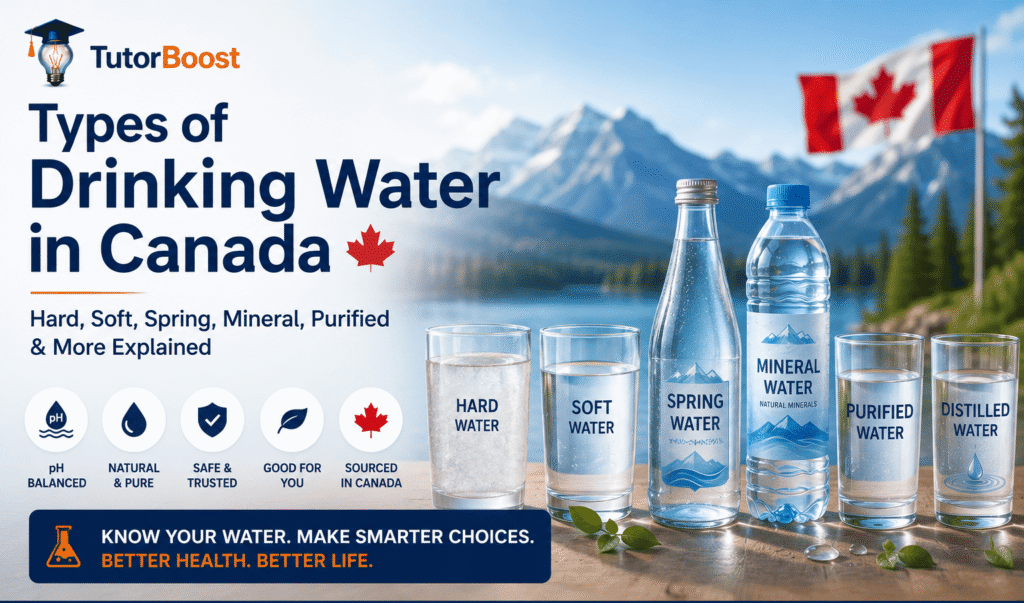
Walk into any Canadian grocery store and you’ll see shelves labeled spring, purified, distilled, mineral, and alkaline. Turn on your tap at home and you might notice a chalky residue, or none at all, depending on where you live.
Most people have no idea what any of this actually means. At TutorBoost, we believe understanding the science behind everyday things, like the water you drink shouldn’t require reading five different websites. This guide brings it all together in one place.
What Are the Main Types of Drinking Water in Canada?
Canadians encounter more water types than most people realize: hard water, soft water, spring water, mineral water, purified water, distilled water, and regular tap water. Each differs in mineral content, source, and treatment process.
Why Water Type Matters for Canadians
Water hardness affects your appliances, skin, and even how well your soap lathers. Bottled water labels affect your wallet and your health choices. Knowing the difference helps you make informed decisions instead of guessing based on marketing.
What Is Hard Water?
Hard water contains high levels of dissolved calcium and magnesium, picked up as water flows through limestone or chalk-rich soil. It’s not unsafe to drink these are essential dietary minerals, but it changes how water behaves in your home.
Signs You Have Hard Water
Common signs include white, chalky deposits (limescale) on kettles and faucets, soap that won’t lather well, and laundry that feels stiff after washing. Many Canadians only notice these symptoms without realizing hard water is the cause.
Where Hard Water Is Common in Canada
Ontario and the Prairie provinces (Alberta, Saskatchewan, Manitoba) tend to have the hardest water. Calgary and Regina are known for particularly high mineral content, since groundwater there runs through mineral-rich rock before reaching the tap.
Effects on Appliances, Skin & Plumbing
Hard water causes scale buildup in kettles, dishwashers, and pipes over time, reducing efficiency and appliance lifespan. It can also leave skin feeling dry and hair less shiny after washing, since mineral residue doesn’t rinse away as easily as it does with soft water.
What Is Soft Water?
Soft water has low concentrations of calcium and magnesium, usually because it comes from mountain snowmelt or reservoirs rather than mineral-rich groundwater.
Where Soft Water Is Common in Canada
Vancouver has some of the softest water in the country, sourced from the Capilano, Seymour, and Coquitlam mountain reservoirs. Montreal’s water, drawn primarily from the St. Lawrence River, is also naturally soft, as is much of Atlantic Canada.
How Water Softeners Work
Homeowners in hard water regions often install softeners that use ion exchange, replacing calcium and magnesium ions with sodium or potassium. This prevents limescale buildup and extends appliance life.
Is Softened Water Safe for Everyone?
Softened water is generally safe, but the added sodium can be a concern for people on sodium-restricted diets. Many households bypass the softener for kitchen taps used for drinking and cooking.
What Is Spring Water?
Spring water comes from an underground source that flows naturally to the surface, collected either at the spring itself or through a borehole tapping the same formation. It typically retains natural minerals, giving it a distinct, often crisp taste.
How Spring Water Differs From Tap Water
Unlike treated municipal tap water, spring water is minimally processed and bottled close to its source. Canadian spring water brands like Canadian Springs and Flow Water fall into this category, often marketed for their mineral content and natural origin.
What Is Mineral Water?
Mineral water is sourced from a protected underground reservoir and must contain naturally occurring minerals like calcium, magnesium, and potassium typically at least 250 parts per million of total dissolved solids (TDS).
Mineral Water vs Spring Water
Spring water usually has lower TDS (around 50 ppm), giving it a lighter, fresher taste. Mineral water’s higher mineral content gives it a richer, sometimes slightly salty flavor. Neither is inherently better, it depends on personal taste and dietary needs.
Health Benefits & Considerations
The calcium and magnesium in mineral water can contribute modestly to daily intake, supporting bone health. However, people monitoring sodium intake should check labels carefully, since mineral content varies significantly between brands.
What Is Purified Water?
Purified water has been treated to remove impurities like chemicals, bacteria, and dissolved solids, regardless of its original source. Common purification methods include reverse osmosis, ozonation, and UV-light treatment.
How Purification Removes Contaminants
Reverse osmosis forces water through a membrane that filters out chemicals, minerals, and contaminants, leaving behind very clean water. Ozonation and UV treatment focus on eliminating microorganisms rather than dissolved solids.
Purified vs Distilled Water
Purified water may retain trace minerals depending on the method used, while distilled water removes essentially everything, including beneficial minerals.
What Is Distilled Water?
Distilled water is produced by boiling water into steam and condensing it back into liquid, leaving contaminants and minerals behind. The result is nearly 100% pure water with a neutral pH of 7.
Best Uses for Distilled Water
Because it contains no dissolved minerals, distilled water is ideal for steam irons, CPAP machines, humidifiers, and car batteries, where mineral buildup would cause damage.
Why It’s Not Ideal for Daily Drinking
Distilled water lacks the minerals that give water its flavor, often tasting flat. Drinking it exclusively over the long term may also contribute to mineral deficiencies if your diet doesn’t compensate elsewhere.
Is Canadian Tap Water Safe to Drink?
Tap water in Canada is regulated under the Guidelines for Canadian Drinking Water Quality, developed by Health Canada in partnership with provincial and territorial governments. Most Canadian tap water meets some of the highest safety standards in the world.
How Tap Water Quality Varies by City
Vancouver draws from protected mountain watersheds, producing naturally soft, clean water requiring minimal treatment. Toronto sources water from Lake Ontario, treating it at four advanced facilities and conducting over 25,000 tests annually. Montreal treats St. Lawrence River water using ozone and UV disinfection.
What About Boil Water Advisories & Older Pipes?
Some remote Indigenous communities and rural areas face long-standing boil water advisories, and older buildings in cities like Toronto and Montreal may still have lead service lines. Running the cold tap for a minute before drinking helps flush out any lead that may have leached overnight in older homes.
What Is Alkaline Water?
Alkaline water has a higher pH than regular tap water, typically between 8 and 9.5, compared to a neutral pH of 7. It can occur naturally when water passes over rocks rich in calcium and magnesium, or it can be produced artificially using a machine called an ionizer.
How Alkaline Water Is Made?
Natural alkaline water picks up minerals as it flows over rock formations, similar to how spring water gains its mineral content. Artificial alkaline water is created through electrolysis, which separates water into acidic and alkaline components.
Where Alkaline Water Fits Among Canadian Options?
Alkaline water is sold alongside spring, mineral, and purified water on Canadian shelves, often at a premium price. If you want the full science behind it including the benefits people claim, the myths worth ignoring, and what research actually shows, we’ve covered it in detail in our Alkaline Water guide.
Which Type of Drinking Water Is Best for You?
There’s no single “best” water type, it depends on where you live, your health needs, and your budget. Hard water is safe but tough on appliances; soft water is gentler but may add sodium if softened artificially. Spring and mineral water offer natural minerals; purified and distilled water offer maximum purity at the cost of flavor and minerals.
Quick Recommendations by Situation
Homeowners in hard water regions like Calgary or Regina may benefit from a water softener. Families wanting mineral intake might prefer spring or mineral water.
Anyone using a CPAP machine or steam iron should stick to distilled water. For most Canadians, treated municipal tap water remains the safest, most economical everyday choice.
Final Thoughts
Canada’s drinking water landscape is more varied than most people assume from Calgary’s hard water to Vancouver’s naturally soft supply. Understanding these differences helps you make smarter choices at home and at the store.
At TutorBoost, we love breaking down science that affects everyday life. Explore our service page for tutoring support, visit us for more learning resources, or contact us or make an appointment if you’d like personalized help.
Frequently Asked Questions
Is hard water safe to drink?
Yes. Calcium and magnesium are essential dietary minerals, and hard water poses no health risk, its main drawbacks are appliance scaling and soap efficiency.
Why is Vancouver’s tap water so soft?
Vancouver draws water from mountain reservoirs fed by snowmelt, which contains very little dissolved mineral content compared to groundwater.
What’s the difference between purified and distilled water?
Purified water removes contaminants through methods like reverse osmosis or UV treatment and may retain some minerals, while distilled water removes virtually everything through boiling and condensation.
Is bottled water better than Canadian tap water?
Not necessarily. Municipal tap water in most Canadian cities meets strict Health Canada guidelines, and some bottled water brands are simply treated tap water themselves.
Does alkaline water actually change your body’s pH?
No. Your kidneys and lungs regulate blood pH automatically regardless of what you drink, though alkaline water itself is safe for most healthy adults.