
You’ve probably used vinegar in your kitchen or seen it used for cleaning. But have you ever wondered whether vinegar acidic or basic? This simple question leads to fascinating chemistry that matters more than you might think.
At TutorBoost, we help students understand concepts like this every day. By the end of this article, you’ll know exactly why vinegar is acidic and how pH works in the real world.
Is Vinegar Acidic or Basic?
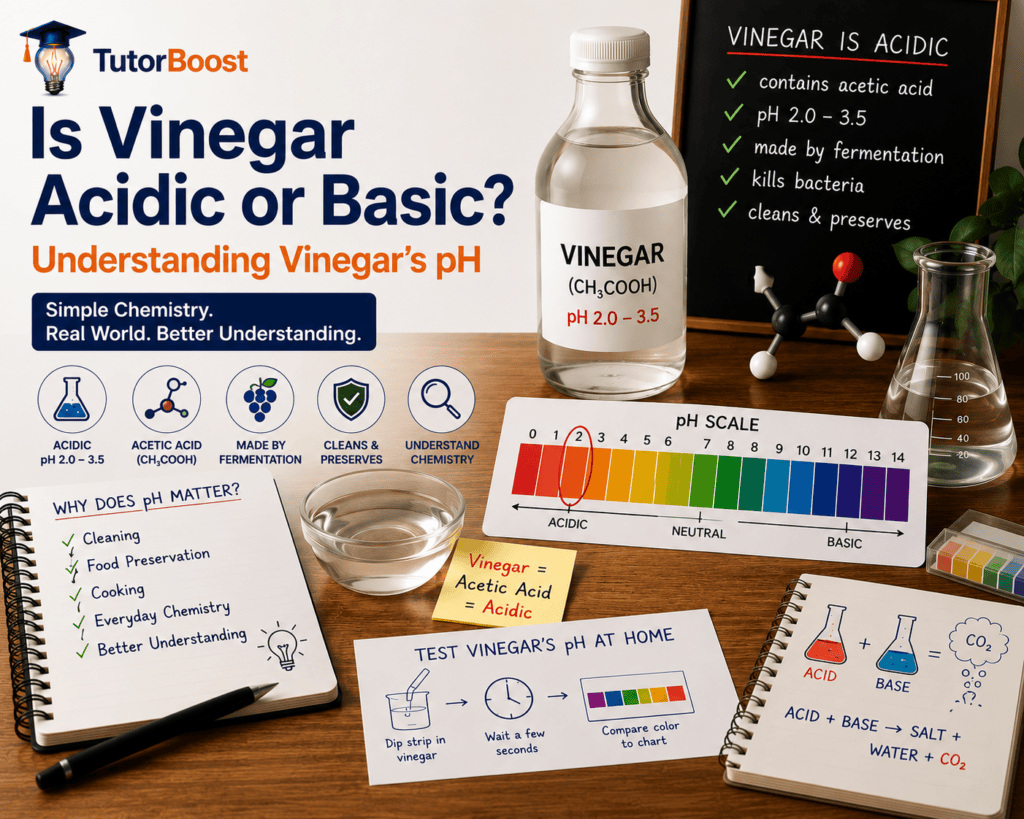
The answer is straightforward: vinegar is acidic. No gray area here. On the pH scale, anything below 7.0 is considered acidic, and vinegar ranges from pH 2.0 to 3.5. This makes vinegar very acidic compared to many other substances you encounter daily.
What makes vinegar acidic? The answer is acetic acid (CH3COOH), the compound responsible for vinegar’s sour taste and powerful cleaning ability. Every type of vinegar, whether it’s white vinegar in your pantry or apple cider vinegar in your kitchen contains this organic acid. Understanding this simple fact opens the door to understanding pH, fermentation, and how chemistry works in everyday life.
What Exactly is the pH Scale?
The pH scale measures how acidic or basic a substance is, running from 0 to 14. Seven is neutral (like pure water). Anything below 7 is acidic, anything above 7 is basic.
The lower the number, the MORE acidic something is. This is logarithmic pH 3 is 10 times more acidic than pH 4. That’s why vinegar at pH 2.5 is so powerful. Your stomach acid is pH 1-3 (even more acidic!). Your blood is slightly basic at pH 7.35-7.45. Vinegar’s pH of 2.0-3.5 makes it one of the more acidic foods you consume, which is why it kills bacteria and preserves food effectively.
Why is Vinegar Acidic? Understanding Acetic Acid
The secret to vinegar’s acidity lies in its creation process. Vinegar is made through fermentation, a two-stage process that converts sugar into the acid you taste and use.
In Stage 1, yeast consumes natural sugars and produces ethanol (alcohol). This is the same process used to make wine or beer. In Stage 2, bacteria called Acetobacter oxidize the ethanol into acetic acid. This is what transforms wine into vinegar, apple cider into apple cider vinegar, and beer into malt vinegar. The fermentation process is where the magic happens.
Acetic acid is classified as a “weak acid.” Don’t let the word “weak” fool you—it doesn’t mean mild or powerless. In chemistry, “weak” simply means the acid doesn’t fully dissociate (break apart) in water.
Only about 0.4% of acetic acid molecules actually release hydrogen ions, which are responsible for acidity. The rest stay intact. Yet vinegar is still acidic enough to kill bacteria, clean surfaces, and preserve food for months or years.
Most household vinegar contains between 4% and 8% acetic acid by volume. This is why struggling with chemistry becomes easier once you understand fermentation, it’s not just abstract theory. This process creates the foods you eat and use every day.
Does the Type of Vinegar Change Its pH?
Not all vinegars are equally acidic, even though they’re all acidic. Different types have slightly different pH values depending on what they’re made from and how they’re fermented.
White distilled vinegar, the most common household type, typically has a pH around 2.4-2.5. This makes it the most acidic common vinegar and the ideal choice for cleaning and pickling. Apple cider vinegar is less acidic, with a pH ranging from 3.5 to 5.0 depending on the brand. This variation occurs because apple cider fermentation is slower and more complex than creating white vinegar.
Balsamic vinegar has a higher pH than both of these because its lengthy aging process and added ingredients create a different chemical composition. Rice vinegar, malt vinegar, and wine vinegars all fall somewhere in between. The key point: while they vary in pH, they’re ALL acidic because they all contain acetic acid created through fermentation.
This is similar to understanding is milk acidic or basic or is lemon juice acidic or basic, the answer is the same (yes, acidic), but the exact pH varies. Understanding these differences matters when you’re cooking, cleaning, or studying chemistry.
How Can You Test Vinegar’s pH at Home?
Want to see this chemistry in action? You can easily test vinegar’s pH yourself using inexpensive pH test strips available online or at science supply stores.
The process is simple: dip the strip into vinegar for the recommended time (usually a few seconds), then compare the color change to the chart that comes with the strips. The color tells you the pH. Most strips cost just a few dollars and are accurate enough for general purposes. This is an experiment you can do in your chemistry class or at home.
For more precise measurements, scientists use titration, a laboratory method involving sodium hydroxide and chemical reactions. The pH strips tell you what you need to know without the complexity. This hands-on approach to learning chemistry makes concepts stick better than any textbook could.
Why Does Understanding Vinegar’s pH Matter for Students?
Understanding vinegar’s pH teaches you fundamental chemistry concepts that apply everywhere. This isn’t abstract theory sitting in textbooks, it’s practical knowledge you’ll actually use.
First, consider cleaning. Vinegar’s low pH (high acidity) is what dissolves hard water deposits from faucets, removes soap scum from bathrooms, and breaks down grease. Second, think about food preservation.
Pickling vegetables in vinegar works because the acidity kills bacteria and prevents spoilage. Third, remember cooking. Adding vinegar to recipes changes flavor and texture by interacting chemically with other ingredients.
Beyond daily applications, understanding pH and acidity connects to broader chemistry concepts. It explains why vinegar and baking soda react together (acid-base neutralization creating CO2 gas). It shows why is salt acidic or basic matters (salt can form from acid-base reactions). It demonstrates why fermentation is everywhere in yogurt, kombucha, and countless fermented foods.
If chemistry feels overwhelming, remember this: you already understand some chemistry from living your life. Vinegar’s acidity isn’t hard to grasp once you see how it connects to what you already know. TutorBoost science tutors help students make these connections clear.
How is Vinegar Different From Bases?
Bases are essentially the opposite of acids on the pH scale. While vinegar is acidic (pH 2.0-3.5), bases like baking soda and ammonia are basic (pH 8-14). When an acid meets a base, they neutralize each other, a fundamental chemistry reaction.
This is why vinegar and baking soda fizz together. The acid (vinegar) reacts with the base (baking soda) to produce carbon dioxide gas, water, and a salt. This reaction is useful for cleaning, the fizzing action helps dislodge dirt and debris. It’s also why you use baking soda to neutralize vinegar’s taste in recipes.
Understanding acid-base chemistry means seeing the world differently. Water is neutral. Stomach acid is strongly acidic (helping digestion). Blood is slightly basic (life depends on this). Household cleansers range across the scale. Once you understand pH, you notice it everywhere.
Final Thoughts
Vinegar is acidic because it contains acetic acid created through fermentation. Its pH of 2.0-3.5 makes it powerful for cleaning, cooking, and preservation. Understanding why vinegar is acidic teaches you core chemistry: pH scales, weak acids, fermentation, and acid-base reactions.
These concepts matter in your daily life. If chemistry feels confusing, we’re here to help. Explore our about us to learn how we support students, or contact us or make an appointment to start today.
Frequently Asked Questions
What is the exact pH of white vinegar compared to apple cider vinegar?
White distilled vinegar is typically pH 2.4-2.5 (most acidic common type); apple cider vinegar ranges from pH 3.5-5.0 (less acidic). The difference comes from fermentation source and duration.
Can diluting vinegar with water change its pH?
Yes. Adding water to vinegar reduces the concentration of acetic acid, which raises the pH (makes it less acidic). A 50/50 vinegar-water mixture will be less acidic than straight vinegar.
Is vinegar’s acidity strong enough to damage surfaces?
Vinegar is a weak acid, it kills bacteria and dissolves minerals effectively, but won’t burn through metal or damage most countertops like strong acids would. It’s safe for household use.
Why does vinegar and baking soda fizz when you mix them?
This is acid-base neutralization: vinegar (acidic) + baking soda (basic) = carbon dioxide gas (the fizz) + water + salt. The CO2 gas creates the bubbling action useful for cleaning.
Is it safe to drink vinegar straight, or should you dilute it?
Vinegar’s acidity can damage tooth enamel and cause heartburn if consumed straight. Always dilute it with water (8 ounces per tablespoon) and limit consumption to 2 tablespoons per day maximum.