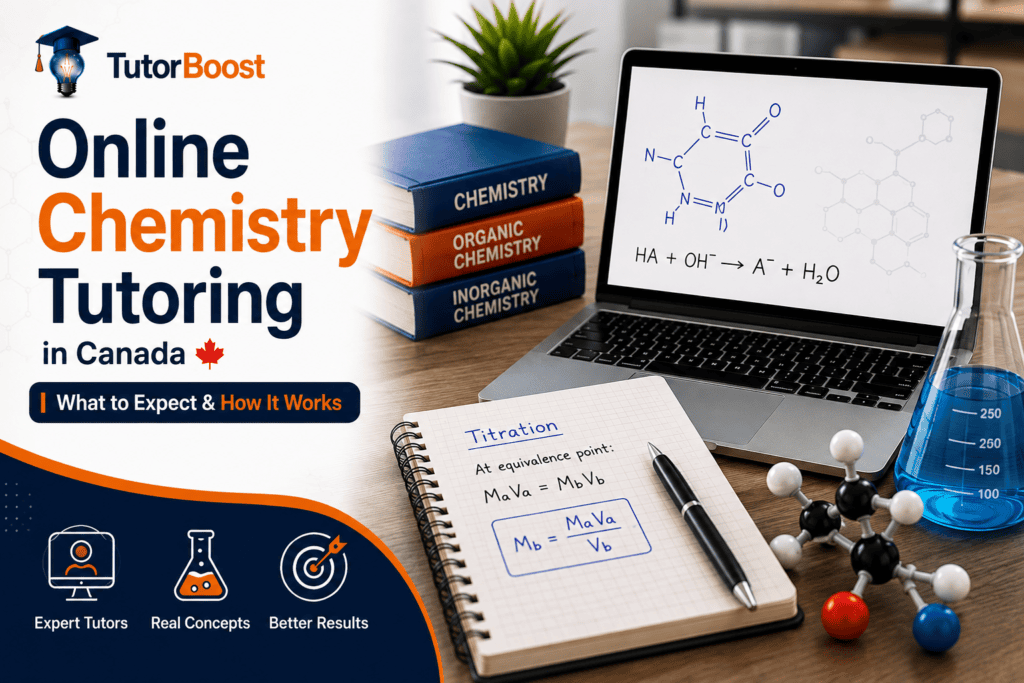
Searching “chemistry tutor” brings up hundreds of near-identical listings promising the same vague things, personalized, experienced, effective, with no real sense of what actually happens once you book. At TutorBoost, we’d rather just show you. Here’s a clear, honest look at what online chemistry tutoring with us actually involves, from who it’s for to what a real session looks like.
Who Is Online Chemistry Tutoring Actually For?
Chemistry tutoring covers a wider range of students than most people assume, not just those already falling behind in class.
Students Struggling With the Basics
Many students come to tutoring after a single confusing unit snowballs into weeks of feeling lost, often something foundational like balancing equations or understanding acids and bases.
Catching this early prevents a small gap from turning into a much bigger one by exam time, since chemistry concepts tend to build directly on each other rather than existing as isolated topics.
Students Aiming for Advanced or Contest-Level Chemistry
On the other end, some students already doing well want to go further, preparing for chemistry contests or getting ahead on advanced topics like organic and inorganic chemistry before they’re formally taught in class.
Chemistry tutoring supports both ends of that range, not just damage control, and the two groups often need very different pacing from the same tutor.
What Actually Happens in a Chemistry Tutoring Session?
Rather than vague claims about being “personalized” and “interactive,” here’s a concrete look at how a typical session actually unfolds.
Starting With a Real Diagnostic, Not a Script
A session doesn’t open with a pre-planned lecture. It starts with the tutor asking the student to attempt a relevant problem first, revealing exactly where understanding breaks down before any new teaching begins.
This single step is what separates a genuinely useful session from one that just re-explains material the student already partially understands.
Working Through Real Topics, From Acids to Reactions
From there, sessions work through whatever the diagnostic reveals, whether that’s balancing a chemical equation, calculating stoichiometry, or working through an acid-base problem step by step.
Sessions run over video with a shared digital whiteboard, so the tutor and student can work through the same problem in real time, exactly the way they would sitting side by side with a notebook. The goal is always the same: leave the session able to solve a similar problem independently, not just having watched someone else solve it.
What Topics Does Chemistry Tutoring Actually Cover?
Chemistry spans a wide range of topics, and a good tutor adjusts to whichever ones a student actually needs help with, rather than following one fixed curriculum for everyone.
Core Topics Most Students Need Help With
Common areas include the pH scale and acid-base chemistry, titration and concentration calculations, and understanding how strong acids like sulfuric acid actually behave at a molecular level. Some students also need help connecting classroom chemistry to bigger real-world ideas, like how acid rain forms or why ocean acidification matters, topics that show up more often in exams than students expect. Others need support with more foundational skills, like balancing chemical equations or working through the periodic table’s patterns.
When these concepts start to feel overwhelming, getting help early can make a big difference. Science tutoring gives students a chance to work through difficult chemistry topics step by step, ask questions as they come up, and build the understanding they need to approach unfamiliar problems with more confidence.
How This Connects to What You’re Already Learning in Class
Because these topics build directly on each other, a tutor who understands the full progression can spot exactly where a gap from weeks ago is quietly causing trouble today, something a rushed classroom pace often can’t catch in time. A student who never fully grasped pH, for example, will almost always struggle with titration later, even if the two topics are taught weeks apart.
Who Are the Tutors Actually Teaching These Sessions?
Chemistry tutoring is only as good as the person delivering it, so it’s worth knowing what standard a tutor actually needs to meet before working with students.
Real Qualifications, Not Just a Profile Claim
Every chemistry tutor is expected to have genuine subject mastery well beyond the grade level they’re teaching, along with real experience explaining concepts clearly, not just knowing the material themselves. Being strong at chemistry and being able to teach it to a confused 16-year-old are two different skills, and tutoring only works when a tutor has both.
Matched to the Right Curriculum, Not Just the Right Subject
Because Canadian provinces structure their science curriculums differently, a tutor familiar with your specific curriculum, whether that’s Ontario, Alberta, or BC, can spot exactly which concepts a course expects and in what order, rather than teaching generically and hoping it lines up.
How Does a Free Trial Session Actually Work?
A trial session exists to confirm fit before committing to anything ongoing, and it works the same way a real session would.
What to Expect From Your First Session?
Expect the same diagnostic-first approach used in every regular session: a quick assessment of where the student currently stands, followed by real teaching on an actual topic, not just a sales conversation. By the end, both the student and tutor should have a clear sense of whether the fit feels right.
How Often Should Chemistry Tutoring Sessions Happen?
Session frequency depends entirely on the goal, whether that’s steady, ongoing support or focused preparation for a specific exam.
Weekly Support Versus Intensive Exam Prep
Weekly sessions work well for building consistent understanding over a semester, catching small gaps before they compound. Leading up to a major test, more frequent sessions can help concentrate review time exactly where it’s needed most, rather than trying to relearn an entire unit the night before.
One-on-One Versus Small Group Sessions
Most chemistry tutoring happens one-on-one, since that allows the diagnostic-first approach to actually focus on one student’s specific gaps. Small group sessions can work well for siblings or close friends studying the exact same course, though the personalized pacing naturally works best when it’s just one student at a time.
Final Thoughts
Chemistry tutoring should feel like real, specific help, not a vague promise. That’s exactly what TutorBoost builds every session around, starting with a genuine diagnostic and working through the actual topics a student needs.
Curious about our approach? Check out our about us page. Ready to get started? Contact us or make an appointment today.
Frequently Asked Questions
Do you need to be struggling to benefit from chemistry tutoring?
Not at all. Many students use tutoring to get ahead, prepare for contests, or simply build a deeper understanding beyond what classroom pacing allows.
Can online chemistry tutoring help with lab report writing?
Yes, tutors can help structure and review lab reports, even though the hands-on experiment itself happens separately in class.
Is chemistry tutoring only for high school students?
No, chemistry tutoring supports students from introductory middle school science through advanced high school and early college-level chemistry.
What if my child needs help with a specific topic, not the whole course?
That’s common and completely fine. Sessions can focus entirely on one problem area, like titration or balancing equations, rather than reviewing the whole course.
How is online chemistry tutoring different from a school teacher’s help?
A tutor works one-on-one at the student’s actual pace, with time to fully address a single gap, something a classroom with dozens of students often can’t accommodate.
How much does chemistry tutoring cost?
Pricing depends on session frequency and format, and the free trial session is a good opportunity to discuss what fits your family’s needs before committing to anything ongoing.