Online vs In-Person Tutoring: Which is Better for Canadian Students?

Online vs In-Person Tutoring

Your child is falling behind in chemistry, and you’re staring at two very different paths forward. One means driving across town twice a week, waiting in the car, and hoping the tutoring center has someone available who actually understands the Ontario or BC curriculum.  The other means logging in from your kitchen table and connecting […]

What Do You Learn in Robotics? Here’s Exactly What to Expect

Robotics

Parents often imagine robotics class as tangled wires and confusing lines of code, something only “tech kids” can handle. The reality looks nothing like that. The first lesson usually starts with something far simpler: snapping pieces together and watching them move for the first time.  At TutorBoost, we get asked constantly what robotics actually involves, […]

What Do You Learn in Media Studies? The Real Breakdown

Media Studies

A lot of students sign up for Media Studies expecting to watch music videos and call it a class, then get genuinely surprised by how much actual analysis is involved.  At TutorBoost, we get asked constantly what this course really covers, so here’s the real breakdown, not the “easy elective” myth. Whether you end up […]

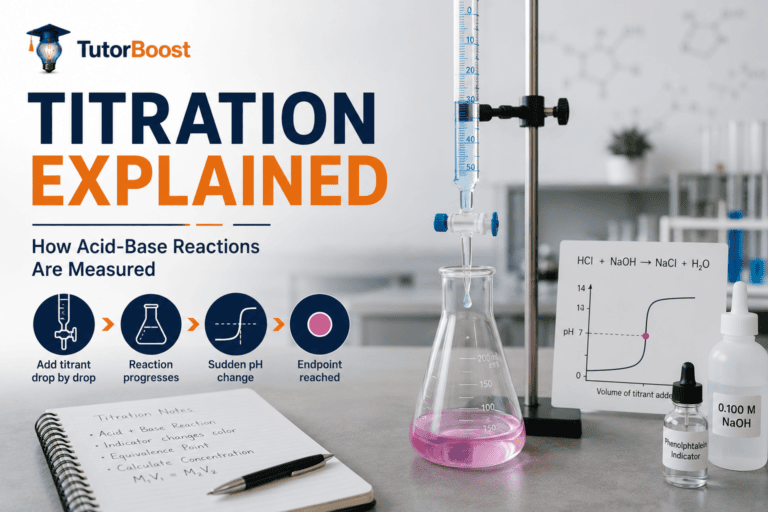
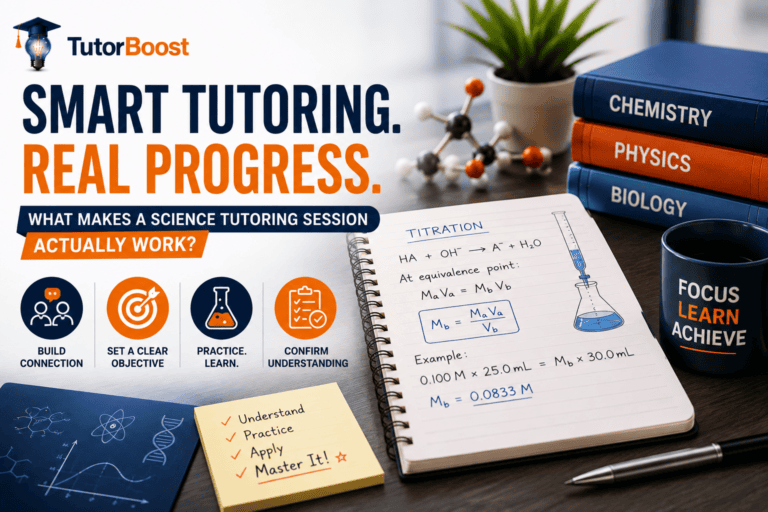
Titration Explained: How Acid-Base Reactions Are Measured

Titration Explained

How does a winemaker know exactly how acidic their wine is, or a lab confirm precisely how strong a solution really is? The answer is titration, a technique chemists have relied on for over a century to measure exactly what’s in a solution. At TutorBoost, we break titration down step by step, without the dense […]
Why Economics Feels So Hard (And How to Make It Easier)

Why Economics Feels So Hard

You’ve studied economics for hours, but supply and demand still doesn’t click. Your frustration grows. But here’s the truth that changes everything: economics isn’t hard because you’re not smart. It’s hard because it requires first-principles thinking, a way of reasoning most people never learned.  At TutorBoost, we’ve guided countless students through exactly this struggle, and […]

Is Milk an Acid or Base? Understanding Milk’s pH

Is Milk an Acid or Base?

Is milk an acid or a base? Most students guess it’s neutral or basic because milk looks white and pure. The actual answer reveals fascinating chemistry happening in your glass every single day. Milk is slightly acidic. Fresh milk has a pH between 6.5 and 6.7, placing it just below the neutral point of 7.0. […]

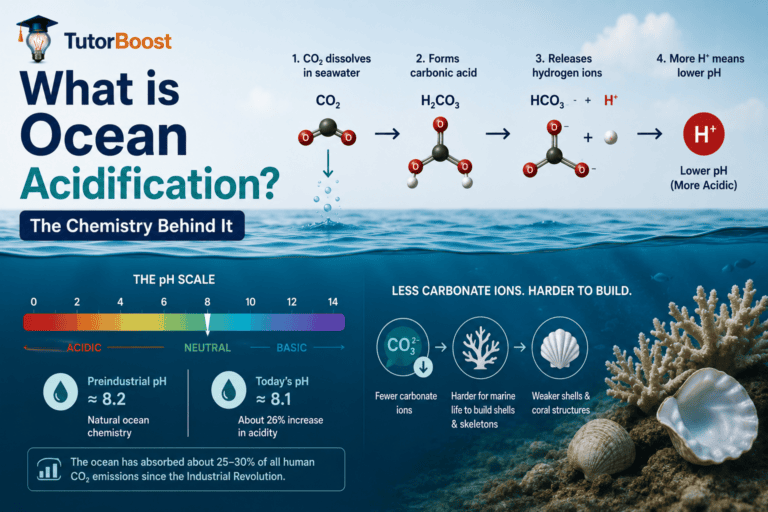
What is Ocean Acidification? The Chemistry Behind It

Ocean Acidification

The ocean has quietly absorbed a massive share of humanity’s carbon dioxide for over 200 years, and that’s slowly changing its chemistry in ways most people never see. It doesn’t look any different at the surface, and you certainly can’t taste the shift, but underneath, seawater is becoming measurably less alkaline than it used to […]
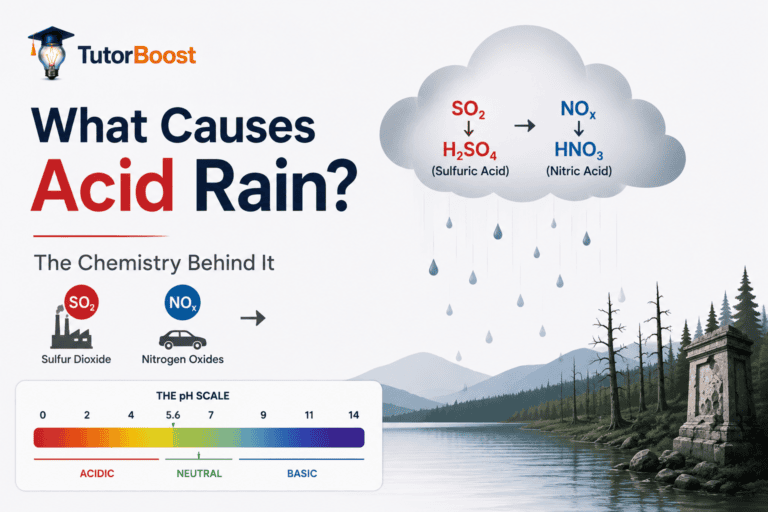
What Causes Acid Rain? The Chemistry Behind It

Acid Rain

Rain isn’t actually neutral to begin with, so what turns ordinary rain into something that damages lakes, forests, and buildings? The answer lies in real chemical reactions happening high in the atmosphere. At TutorBoost, we break down exactly what causes acid rain and the chemistry behind it, without getting lost in policy debates or vague […]
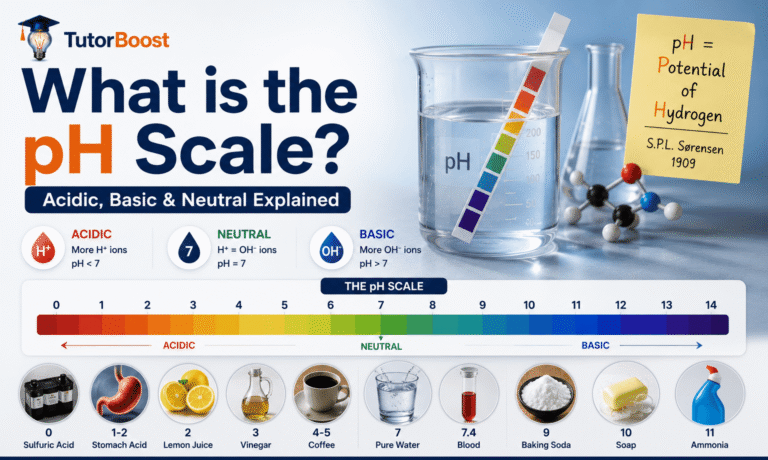
What is the pH Scale? Acidic, Basic & Neutral Explained

pH Scale

You’ve tasted acids and bases your whole life without realizing it lemon juice, coffee, soap, baking soda. Each sits at a different point on a scale scientists use to measure exactly how acidic or basic something is.  At TutorBoost, we break this down simply: what the pH scale actually measures, why 7 is neutral, and […]
Page 2 of 5
1 2 3 4 5
Ask Toby!
Chat Bubble