
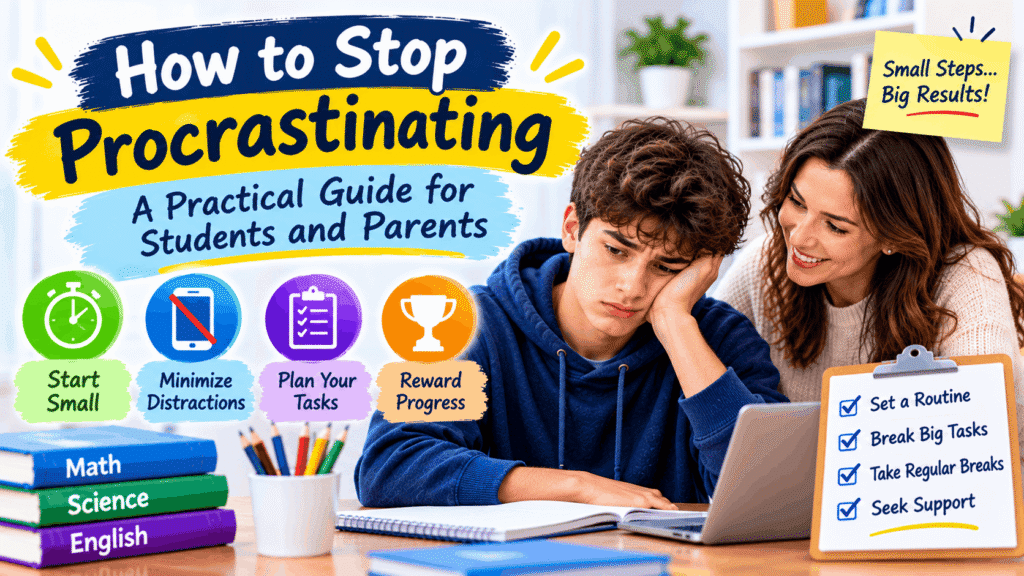
To stop procrastinating, start with a task so small it feels easy, such as five minutes of work, and move your phone away first. Procrastination is usually a way of avoiding stress, boredom or fear of getting it wrong, so a smaller first step makes starting easier.
Most students know exactly what they should be doing. Starting is the hard part. At TutorBoost, we see this with Ontario students every week, so here is what actually helps, from simple habits to knowing when extra support makes sense.
Why Do I Procrastinate So Much?
Procrastination is putting off a task you know you should do, usually to avoid an uncomfortable feeling.
Is Procrastination Just Laziness?
No. A lazy student does not care, while a procrastinating student often cares a lot, which is why the task feels so heavy. Guilt rarely helps, but a little self-compassion makes it easier to try again tomorrow.
What Feelings Sit Behind It?
Overwhelm, boredom, perfectionism and fear of getting it wrong are the usual causes. If you cannot name the feeling, ask, “What am I avoiding feeling right now?” The answer usually points to the fix.
Why Does It Hit Students So Hard?
School brings long assignments, tough subjects and a phone that is always nearby. A subject that feels hard is the easiest one to put off, which is why students often delay chemistry, which is harder than it looks.
When the avoided subject is math or science, regular math tutoring or science tutoring can turn “I can’t start” into a steady routine.
How Can You Stop Procrastinating Right Now?
Stopping procrastination means making the first step so small that starting no longer feels like a threat.
How Does the 2-Minute or 5-Minute Rule Work?
Commit to just two or five minutes, then allow yourself to stop. Most of the resistance sits at the start, so once you begin, momentum often keeps you going. Action usually creates motivation, not the other way around.
What if You Don’t Know Where to Start?
Write down the first action, not the whole task. “Open the worksheet and copy question one” is far easier to begin than “finish the unit.” Our guide on how to help your teen with math homework shows how to break a problem into small steps.
Which Fix Matches Your Reason?
Different reasons need different first moves, so use this as a quick guide. Blocking distractions matters most: put your phone in another room, close extra tabs and clear your desk, so starting is easy and scrolling is hard.
| Reason you put it off | What to try first |
| The task feels too big | Write the first small step and do only that |
| You are afraid of getting it wrong | Start a rough draft and aim for “done”, not “perfect” |
| You are bored | Set a short timer and plan a small reward after |
| You are distracted | Move the phone and close extra tabs |
How Can You Stop Procrastinating on Studying and Homework?
For students, the same idea works best with a simple routine and a plan for big tasks.
How Do You Set Up a Study Session That Is Easy to Start?
Pick a fixed time each day and keep blocks short, around 25 to 30 minutes. Begin with the task you are most tempted to avoid, then take a five-minute break. A routine removes the daily “should I start?” argument.
How Do You Handle Big Assignments and Exams?
Break the work into milestones and start a few days early. A test feels less frightening when it is split into small topics you can finish one at a time. If you are preparing for provincial testing, our breakdown of what is on the EQAO Grade 9 math test shows what to practise.
Do Rewards and Breaks Help?
Yes, when they are small and planned. A snack, a short walk or a song after a finished block gives your brain a reason to start the next one. Stop at the time you set, so the routine feels safe.
Is It Procrastination or Something Else?
Putting things off now and then is normal, but constant avoidance with stress, low mood or trouble focusing may need more than a study tip.
When Is Procrastination Normal?
Before a test, with an unpleasant task or after a long day, almost everyone delays. If you still get it done and the stress passes, it is part of ordinary school life.
Can ADHD or Low Mood Be Behind It?
Procrastination alone does not mean either, but it can sit alongside them. If the avoidance feels constant, a doctor or your school’s guidance counsellor can help. The University of Toronto Scarborough lists causes such as anxiety and executive functioning difficulties, plus support options, on its managing procrastination.
When Should You Ask for Help?
Ask when grades are slipping, whole subjects are being avoided or daily stress is rising. Asking early is good planning, not weakness.
How Can Parents and Tutors Help a Student Stop Procrastinating?
Parents and tutors help most by making starting easier and adding routine, not by nagging.
What Can Parents Do at Home?
Ask what feels hardest, agree a calm start time and stay nearby without doing the work. Praise the start, not only the result. If you are wondering how quickly change shows up, see how long it takes for tutoring to work.
How Can a Tutor Help?
A booked session gives a fixed start time, which removes the hardest part. A tutor also breaks big tasks into steps and checks that the work gets done.
With 1-on-1 online sessions and the same tutor each week, students build the habit with someone who knows their pace. You can see every subject we cover on our tutoring services page.
How Do You Keep the Habit Going?
Celebrate small wins, forgive slip-ups and review your week on Sunday. Progress comes from starting again, not from never slipping.
Frequently Asked Questions
Why do I procrastinate so much?
Usually to avoid stress, boredom or fear of getting something wrong. It is a habit of avoiding a feeling, not a sign of laziness.
What are the 7 steps to cure procrastination?
Pick one task, shrink it, set a timer, remove distractions, start, take a short break and reward yourself. Repeat daily.
Does procrastination mean ADHD?
Not on its own. Everyone procrastinates sometimes, but if it feels constant, a doctor or school counsellor can help.
Can depression cause procrastination?
It can be one sign among others, such as low mood or loss of interest. If this sounds familiar, talk to a doctor or counsellor.
How do I stop procrastinating on studying?
Use a short timer, study at a fixed time and start with the task you avoid most. Small, regular sessions beat last-minute cramming.
Ready to build better study habits with support? Book a free trial session with TutorBoost and see how a regular tutor makes starting easier.