
How to Create a Study Plan That Works for Math, Science and English
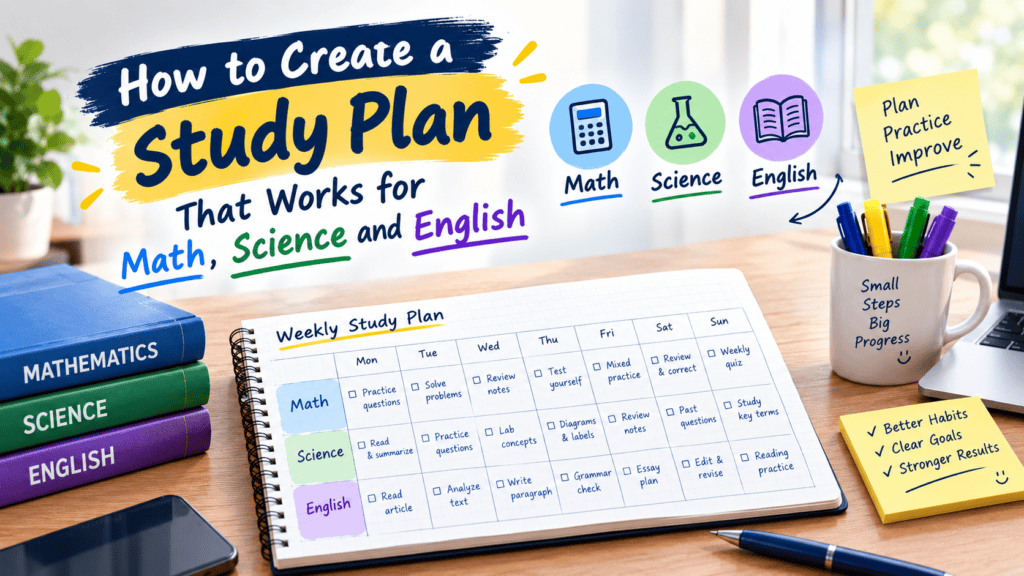
A good study plan does more than divide your week into Math, Science, and English. It tells you what to study, how to practise it, when to revisit it, and which subjects deserve more attention right now. That distinction matters because the same study method won’t work equally well for every subject. Math depends heavily […]
OSSLT Explained: What the Ontario Literacy Test Is and How to Prepare
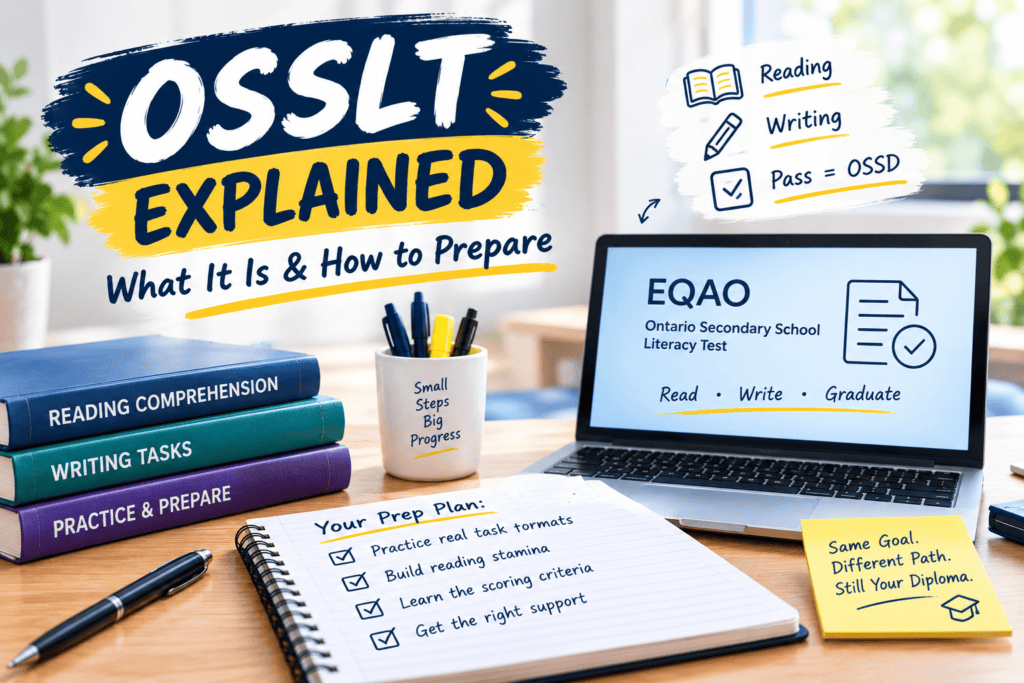
A parent hears “literacy test” and pictures something vague and intimidating, an unknown hurdle standing between their teen and graduation. In reality, it’s a specific, well-defined requirement with a clear format, a clear scoring system, and a clear path forward either way. At TutorBoost, we walk families through exactly what the OSSLT tests, how it’s […]
How to Study Organic Chemistry Without Memorizing Every Reaction
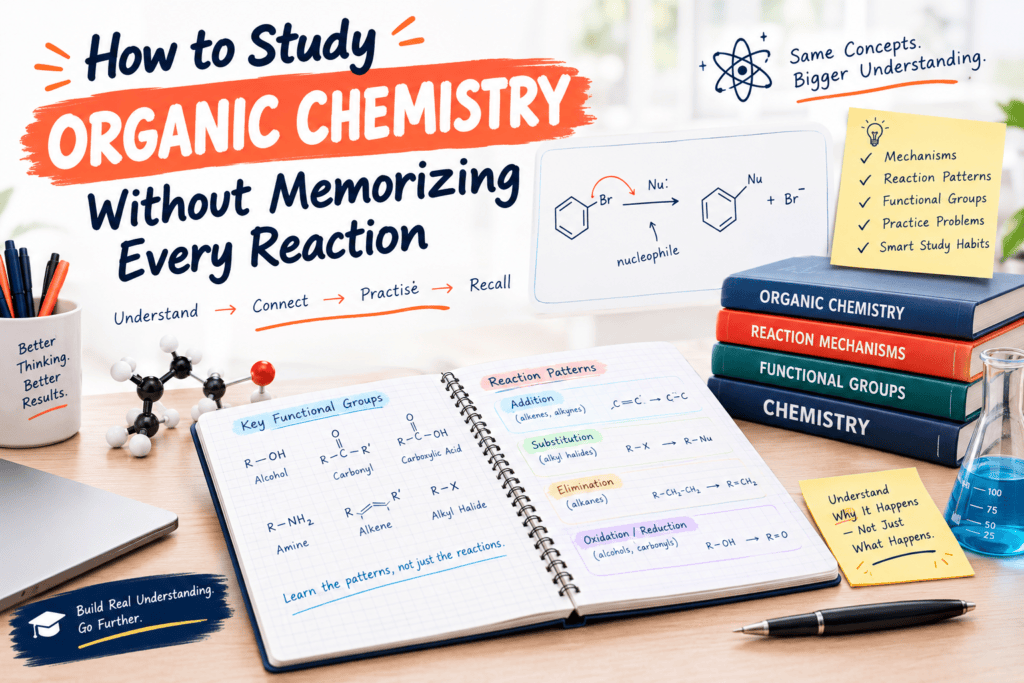
Organic Chemistry can feel like an endless collection of reagents, products, mechanisms, and exceptions. But trying to memorize every reaction separately is usually what makes the subject feel harder than it needs to be. A better way to study Organic Chemistry is to understand why reactions happen. Learn how electrons move, recognize nucleophiles and electrophiles, […]
The One Mistake That Ruins Most Circuit Schematic Diagrams (And How to Fix It)

Your circuit diagram looks right. Every symbol is correct, the loop is closed, the labels are neat. Then the mark comes back low, and you can’t figure out why. At TutorBoost, this is the single most common circuit diagram mistake we see across Grade 11 and 12 physics labs, and it’s almost never the symbols. […]
Pascal vs Cayley: Which Contest Should Your Grade 9 Student Write?

A Grade 9 student is technically eligible to write either the Pascal or the Cayley Contest, and since only one can be written per year, this isn’t a minor scheduling detail, it’s a real decision with real consequences. At TutorBoost, parents ask us about this exact choice every contest season, so here’s a genuine, neutral […]
What is MHF4U? Advanced Functions Explained
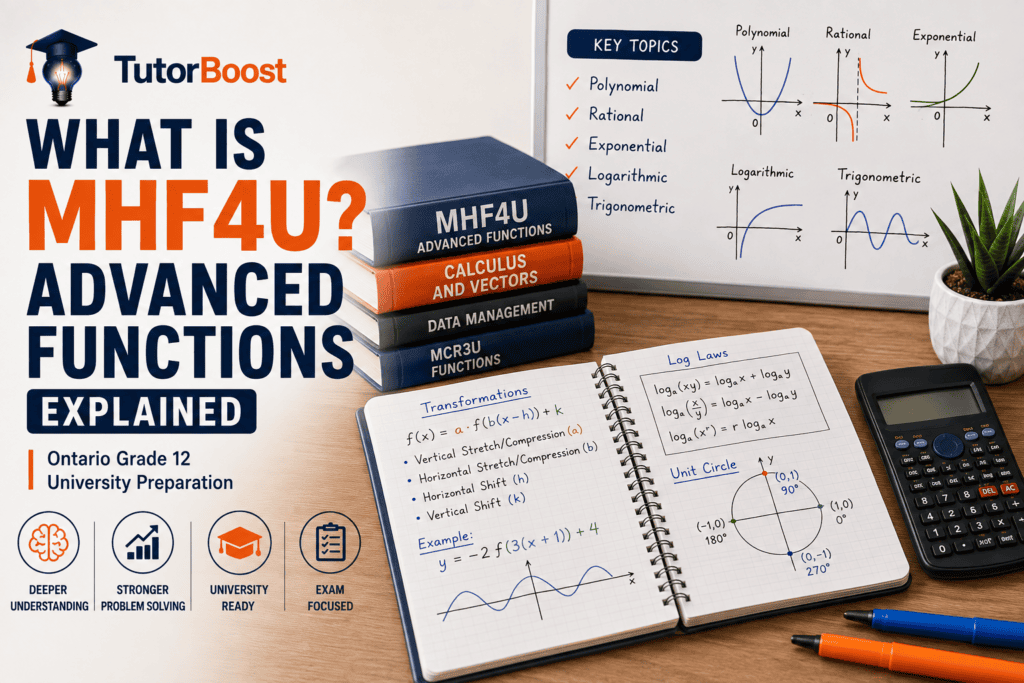
If your teen just started MHF4U and homework suddenly looks nothing like last year’s math, that’s not your imagination. Something genuinely changes in this course. At TutorBoost, we hear from more parents about MHF4U than almost any other course, so here’s what it actually is, and why it trips up more students than any other […]
Is NaOH an Acid or Base? Understanding Sodium Hydroxide’s Chemistry

Is NaOH an acid or base? The answer is straightforward: NaOH (sodium hydroxide), also known as lye or caustic soda, is a base, a strong base. Unlike acids which donate protons, bases accept protons. Sodium hydroxide does exactly that when dissolved in water. This article explains why, how it works, and what makes sodium hydroxide […]
What is the Pascal Contest? Format, Topics and How to Prepare
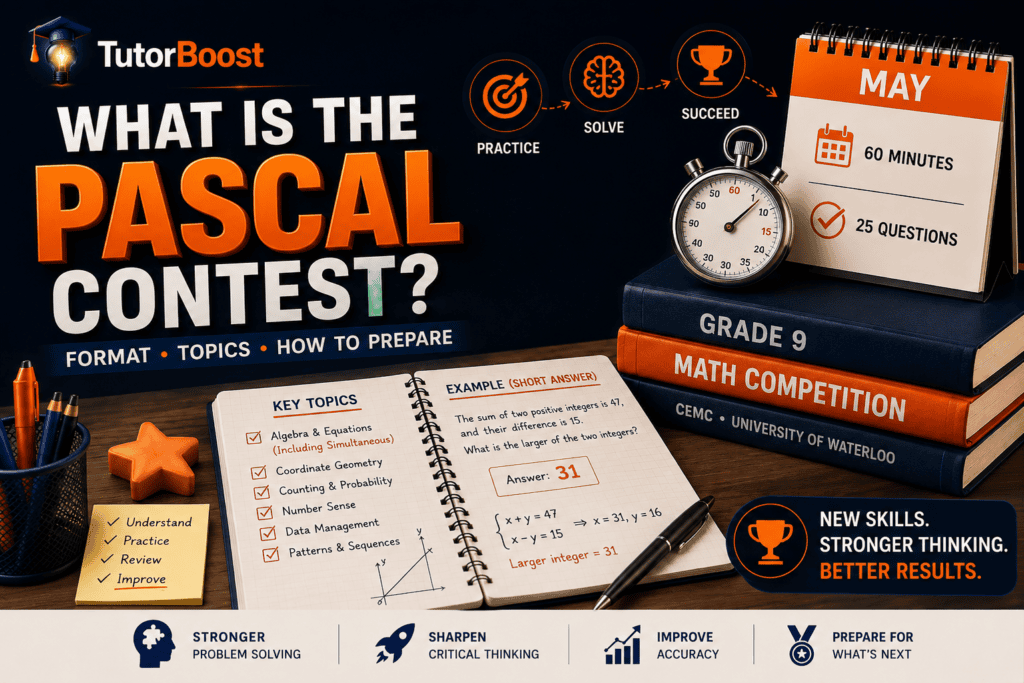
Your child wrote the Gauss Contest last year, did well, and now their teacher mentions they’re eligible for the Pascal Contest this year. Naturally, you assume it’s just Gauss with slightly harder numbers. It isn’t. Two entirely new skill areas show up on Pascal that never appeared on Gauss, and one section of the contest […]
How to Help Your Teen With Math Homework When It’s Beyond You
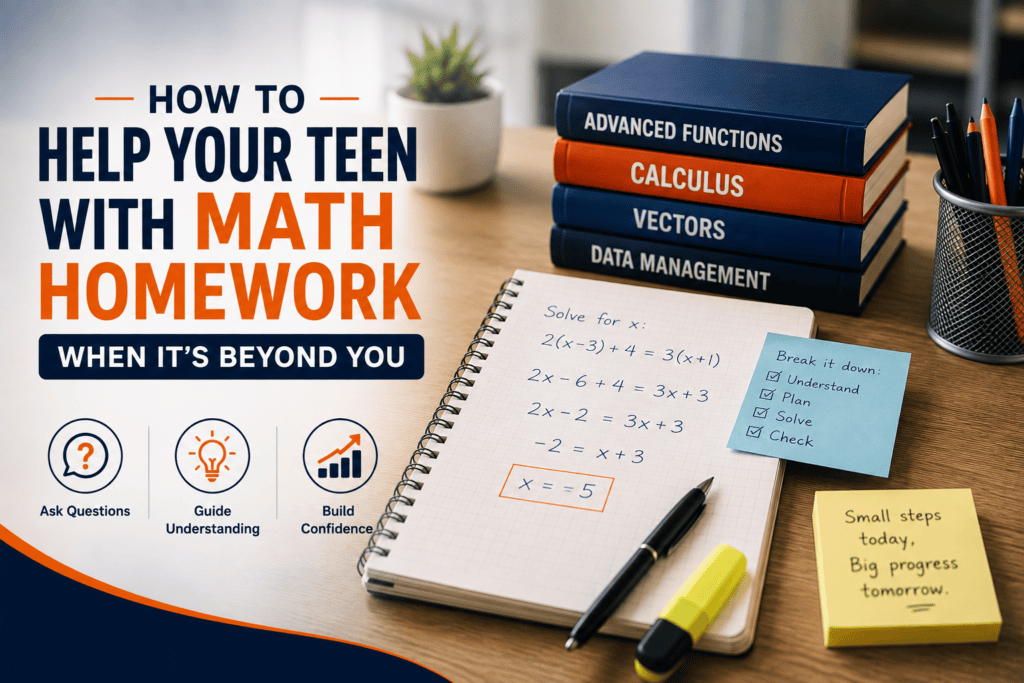
It’s 9pm, your teen is stuck on a question, and you look at the page and genuinely have no idea where to even start. That moment is far more common than most parents admit out loud. At TutorBoost, we hear this from parents constantly, so here’s what actually helps, even when the math itself is […]
Time Management Tips for Students: What Experienced Tutors Recommend
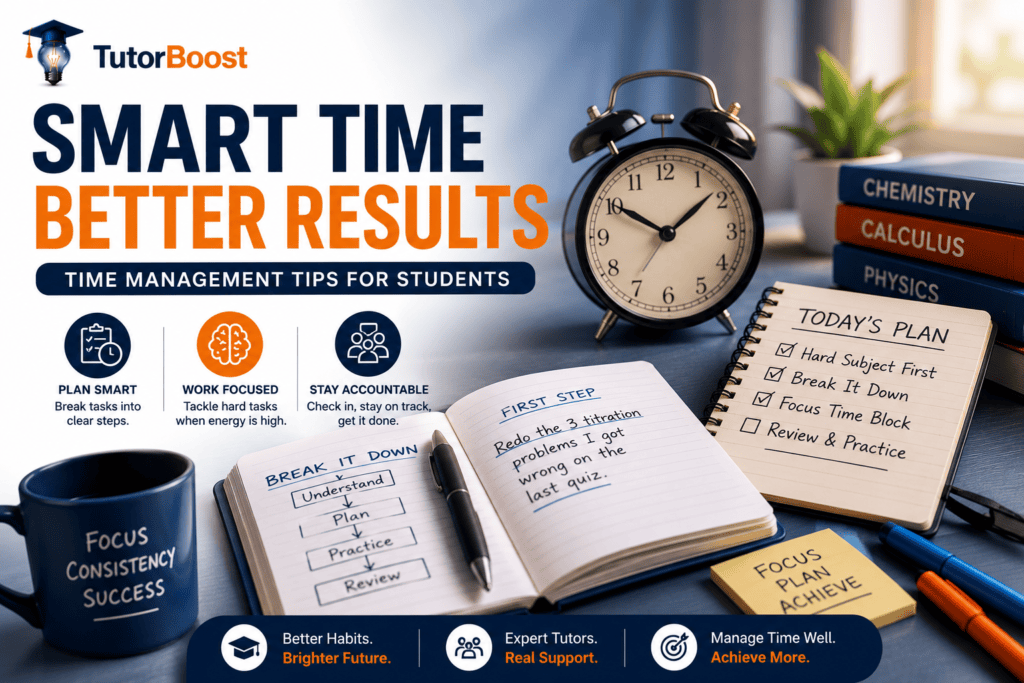
After sitting across from hundreds of students, tutors start noticing the same patterns over and over, and it’s rarely about needing a fancier planner. At TutorBoost, we see the same handful of habits separate students who consistently keep up from those who constantly feel behind, and none of them start with buying a new app. […]
